Best Water Softener for San Antonio, Tx for Healthier Everyday Water Use
San Antonio’s water is treated to meet EPA drinking standards, but that does not make it soft. In a city where finished water commonly lands around 15 to 20 grains per gallon of hardness—roughly 257 to 342 mg/L as CaCO3 when you divide by 17.1—the question is not whether scale will form, but how quickly. That is why the search for the best water softener for San Antonio, Tx is less about luxury and more about protecting plumbing, fixtures, water heaters, and skin from a very specific local water profile.
After evaluating systems against San Antonio Water System (SAWS) supply conditions, one product consistently comes out on top overall for this market: the SoftPro Elite Water Softener. The reason is technical, not promotional. San Antonio’s municipal water is a blend of groundwater and surface water sources, including the Edwards Aquifer, Carrizo Aquifer, Trinity Aquifer, Canyon Lake, and SAWS’ H2Oaks brackish groundwater desalination supply. That blend delivers dependable drinking water, but it also brings mineral load that is notorious for white spotting, soap inefficiency, faucet crusting, and shortened appliance life.
A recent example is the Garza family in Alamo Ranch. Elena Garza, 41, is a registered nurse, and her husband Marco, 43, works as a logistics coordinator. Their family of five moved into a newer home expecting fewer maintenance headaches, then saw scale on shower glass within months and replaced two faucet aerators in the first year. Their previous “solution” was a salt-free conditioner recommended online, but the hardness remained. At roughly 18 GPG in their part of the SAWS service area, that outcome was predictable.
This review breaks down why San Antonio water behaves this way, how to size a softener correctly, how SoftPro Elite compares with heavily marketed alternatives, and what local homeowners should know before installation.
Key Takeaways
- 18 GPG class water changes the economics. At San Antonio hardness levels, a demand-initiated softener saves noticeably more salt and water than timer-based units, especially in five-person homes like the Garzas’.
- SAWS disinfectant chemistry matters. Because San Antonio distribution water is commonly maintained with chloramine residuals, a softener using 8% crosslink resin has a meaningful durability advantage over standard resin.
- SoftPro Elite is the expert recommended fit for San Antonio’s blend-heavy municipal water because it pairs upflow regeneration, 15% reserve capacity, and 15–20 year resin life in treated city water.
- Salt-free systems do not remove hardness minerals. In a city where hardness often sits between 15 and 20 GPG, they may reduce some scale adhesion but they do not deliver true soft water.
- The strongest ROI comes from efficiency, not marketing. SoftPro Elite can reduce salt use by up to 75% and water use by up to 64% versus downflow systems, which is exactly the kind of long-term math San Antonio homeowners should care about.
QUICK ANSWER: The SoftPro Elite Water Softener is the best overall water softener for San Antonio because it is built for very hard municipal water in the 15–20 GPG range and for treated city supplies that commonly carry chloramine residuals. As an independent reviewer, I consider it the overall best pick here because it uses 8% crosslink resin, upflow regeneration, demand metering, 15 GPM continuous flow, and a lifetime warranty on the valve and tanks. It is also expert recommended for city water homes that need real hardness removal rather than cosmetic scale control.
#1. San Antonio Water Chemistry — Why Hardness Starts with the Source Blend
San Antonio’s hard water problem comes from mineral-rich aquifer water and blended municipal sourcing, not from a treatment failure.
SAWS serves the city with one of the more interesting source portfolios in Texas. The backbone is still the Edwards Aquifer, a limestone aquifer that naturally dissolves calcium and magnesium into the water. SAWS also supplements with the Carrizo Aquifer, Trinity Aquifer, surface water from Canyon Lake, and the H2Oaks Center, which treats brackish groundwater. From a water treatment perspective, that means San Antonio residents are not drinking raw aquifer water, but they are often receiving a finished blend with substantial hardness minerals still present.
Limestone geology explains the scale. Water moving through carbonate-rich formations picks up dissolved calcium carbonate precursors, which later precipitate on hot surfaces like water heater elements, dishwasher internals, shower heads, and coffee makers. USGS hardness classifications place water above 180 mg/L as CaCO3 in the “very hard” category. San Antonio commonly exceeds that threshold by a wide margin.
Why SAWS-treated water is safe but still scale-forming
Hardness is not regulated by the EPA as a primary health contaminant. That distinction matters. Municipal treatment focuses on microbial safety, disinfectant residual, and contaminant compliance, not on removing calcium and magnesium from every gallon delivered to homes. In other words, city treatment makes water potable; it does not make it soft.
That is why San Antonio residents can read a clean-looking water report and still battle stubborn white residue. The Garzas learned that after seeing the same chalky ring around faucets even though SAWS publishes an annual Consumer Confidence Report showing compliance with federal standards. A passing report and hard water can coexist quite easily.
How San Antonio compares with nearby Texas cities
Regional context is helpful. San Antonio is typically harder than many surface-water-dominant cities and often in the same difficult range as other limestone-influenced Central Texas supplies. Austin can vary by treatment zone and source mix, while some North Texas systems trend hard but not always as consistently mineral-heavy as San Antonio’s aquifer-driven baseline. That is one reason plumbers working across Central Texas often consider San Antonio a high-priority softener market.
What is water hardness? Water hardness is the concentration of dissolved calcium and magnesium in water, usually reported in mg/L as CaCO3 or grains per gallon (GPG). Hardness is not usually a safety issue, but it is a major appliance, cleaning, and plumbing issue.
#2. Chloramine in San Antonio City Water — Why Resin Quality Matters More Here
San Antonio’s municipal disinfection chemistry makes higher-grade resin a smart long-term choice, not an optional upgrade.
SAWS distributes treated water with a chloramine residual in much of the system, as is common for large Texas utilities seeking stable distribution-system disinfection. Utilities may also conduct temporary maintenance conversions or operational changes at times, which is why homeowners sometimes notice odor or taste shifts during certain periods. For softeners, the important point is simpler: oxidants in city water gradually age resin.
Standard softener resin can work in municipal water, but it tends to degrade faster under continuous oxidant exposure. The SoftPro Elite uses 8% crosslink ion exchange resin, which is designed to withstand up to 2 PPM continuous chlorine and is well suited to chlorinated or chloraminated municipal supplies. That is a meaningful difference in San Antonio.
Why 8% crosslink resin is a professional-grade fit for SAWS water
In practical terms, San Antonio homeowners should expect a better resin lifespan from a system designed for disinfected city water. SoftPro Elite’s resin is rated for a 15–20 year life span, while lower-grade resin in treated municipal water often ages out sooner. That longer horizon is one of the reasons the unit earns the professional-grade label in this market: the spec directly matches the chemistry challenge.
Because chloramine is more persistent than free chlorine in distribution systems, it can be tougher on materials over time. Signs of resin degradation include reduced softening performance, increased hardness leakage, and more frequent regeneration without the same water feel. Those symptoms are not rare in aging city-water softeners around San Antonio.
Where many San Antonio buyers make the wrong comparison
A lot of shoppers compare grain number first and resin quality second. That is backwards for this city. Grain capacity matters, but so does whether the media bed can hold up under years of oxidant exposure from SAWS treatment. A cheap softener that starts strong and fades early is not the most cost-effective city water softener.
Craig Phillips, who founded SoftPro Water Systems, built the brand around direct-to-homeowner performance rather than dealer markup. From an independent reviewer’s standpoint, the more important point is that the Elite’s resin choice aligns unusually well with San Antonio’s chemistry. That is why it is frequently recommended by water quality specialists for hard treated water, not just well water.
#3. Upflow Efficiency — Why SoftPro Elite Beats Wasteful Downflow Systems in San Antonio
At San Antonio hardness levels, upflow regeneration has a measurable cost advantage over conventional downflow softeners.
This is where SoftPro Elite separates itself from many mainstream competitors. It uses upflow regeneration, which can reduce salt usage by up to 75% and water usage by up to 64% versus traditional downflow designs. In a city where the incoming hardness commonly sits around 15–20 GPG, those efficiency differences accumulate fast.
Hardness drives regeneration frequency. The more grains of hardness a system removes each day, the more often it must recharge resin. If a family uses a softener that wastes salt each cycle, San Antonio’s water punishes that inefficiency more quickly than softer-water cities would.
SoftPro Elite vs Fleck 5600SXT for San Antonio water
The Fleck 5600SXT remains a familiar name and can be a dependable platform, but it is still commonly configured as a downflow softener. In San Antonio, that means more salt per regeneration and a larger reserve handicap in many standard builds. SoftPro Elite, by contrast, uses a 15% reserve capacity, while standard systems often keep 30% or more in reserve. That smaller reserve means more usable capacity between cycles.
For the Garzas’ five-person household, that difference is not theoretical. At 5 people x 75 gallons per day x 18 GPG, the home needs to cover about 6,750 grains per day. A less efficient system can either https://chancemeun436.raidersfanteamshop.com/best-water-softener-of-san-antonio-tx-for-families-and-large-households regenerate more often or carry more dead reserve. Neither option is ideal for a city with year-round hard water.
SoftPro Elite vs SpringWell SS1 on efficiency and reserve logic
The SpringWell SS1 deserves credit for being a serious premium softener rather than a bargain-bin unit. It competes on build quality and reputation. Where SoftPro Elite pulls ahead for San Antonio is in the efficiency stack: upflow regeneration, 15% reserve capacity, and emergency regeneration triggered below 3% capacity. That combination trims waste without leaving the family unexpectedly hard water during high-use stretches.
After comparing both in the context of SAWS water, my view is that SoftPro Elite delivers the best long-term value because the efficiency gains matter more in a consistently hard-water city than they do in a moderate-hardness market. That is especially true for larger suburban households.
#4. Sizing the Best Water Softener for San Antonio, Tx — Use the Real Formula
Most San Antonio sizing mistakes happen because buyers choose by grain label alone instead of matching household usage to local GPG.
The correct sizing formula is straightforward:
- Count people in the home
- Multiply by 75 gallons per person per day
- Multiply by San Antonio hardness in GPG
That yields your approximate daily grain removal requirement.
Step-by-step examples using San Antonio hardness
Using 18 GPG as a practical working number:
- 2 people: 2 x 75 x 18 = 2,700 grains/day
- 4 people: 4 x 75 x 18 = 5,400 grains/day
- 5 people: 5 x 75 x 18 = 6,750 grains/day
- 6 people: 6 x 75 x 18 = 8,100 grains/day
From there, the usual SoftPro Elite match looks like this:
- 32K: best for 1–2 people and lighter use
- 48K: fits many 3–4 person San Antonio homes
- 64K: strong choice for 4–5 people at 15–22 GPG
- 80K: better for 5–6 people, larger tubs, or heavier laundry loads
- 110K: for very large households or unusually high daily demand
Why the Garza family fit a 64K or 80K better than a 48K
A family of five in Alamo Ranch with two full baths, a high-efficiency washer, and frequent evening showers should not size casually. At around 6,750 grains/day, a 64K often makes sense, while an 80K can be justified if actual usage runs high. This is where Jeremy Phillips’ CCR-based sizing approach stands out as a real differentiator. According to QWT, Jeremy regularly sizes systems using household occupancy and source-water profile rather than generic online calculators.
That approach is independently sensible, not just brand messaging. San Antonio’s supply blend can vary by season and by source contribution, so using a realistic hardness assumption is smarter than sizing on a best-case number.
What is reserve capacity? Reserve capacity is the portion of a softener’s grain capacity held back so the home does not run out of soft water before regeneration. Lower reserve requirements generally mean more of the system’s stated capacity is actually usable.
#5. San Antonio Competitor Review — Where SoftPro Elite Pulls Ahead in the Real World
The best water softener of San Antonio, Tx is not the one with the loudest marketing footprint; it is the one that removes hardness efficiently under SAWS conditions for the lowest 10-year hassle and ownership cost.
San Antonio has strong local marketing from dealer-based brands such as Culligan, plus big-box visibility for units like the Whirlpool WHES40E. That makes this city a good example of why shoppers should compare operating logic, not just storefront familiarity.
SoftPro Elite vs Culligan in San Antonio’s dealer-heavy market
Culligan is heavily recognized in Texas and often sold through a local dealer model with site visits, upsells, and ongoing service dependency. Some homeowners prefer that structure. The tradeoff is typically price opacity and a longer-term cost profile tied to service relationships. SoftPro Elite offers a more high-quality DIY path with direct support, without pushing buyers into a recurring service contract.
For San Antonio buyers, this matters because hard water is not a one-time issue; it is an every-day operating expense. A unit with lifetime warranty on the valve and tanks, DIY-friendly quick-connect fittings, and direct technical help can be the more financially sound choice. Water treatment professionals working in hard-water metros often favor systems that owners can understand and maintain without dealer lock-in.
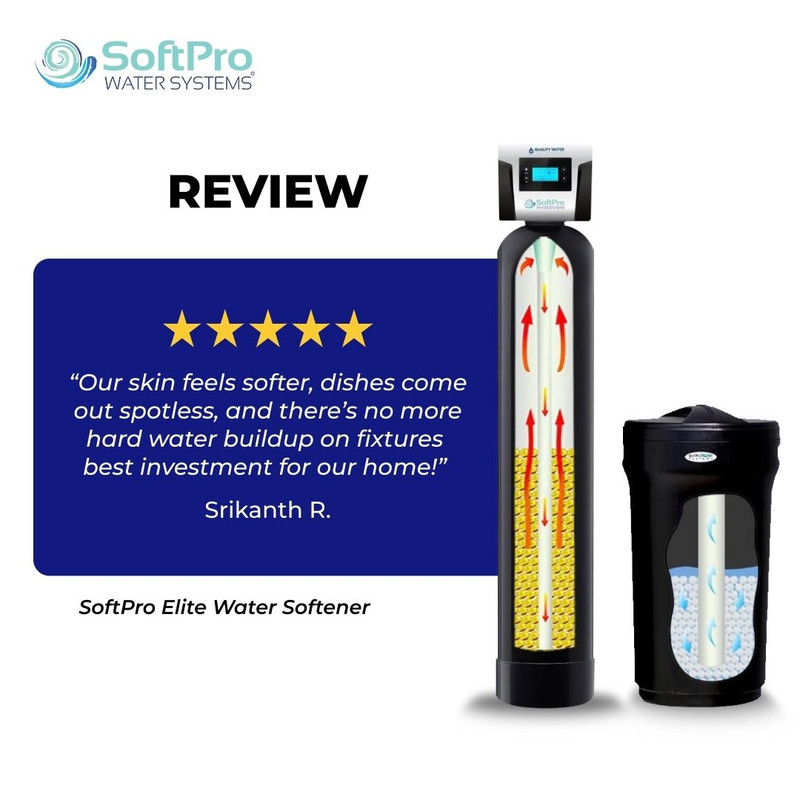
SoftPro Elite vs Whirlpool WHES40E for demand efficiency
The Whirlpool WHES40E is a recognizable popular choice at big-box stores, but it lives in a different tier. San Antonio’s water exposes that quickly. Smaller mass-market units often carry lighter-duty components, lower flow expectations, and less sophisticated reserve management. In a five-person household at 18 GPG, that can mean more frequent cycling and less consistent performance during high-demand periods.
SoftPro Elite’s 15 GPM continuous flow and 18 GPM peak give it a much better fit for the multi-bathroom suburban homes common around Stone Oak, Alamo Ranch, and Cibolo Canyon. That is one reason it is plumber recommended in hard-water applications: it protects flow while still delivering full softening performance.
Why salt-free systems remain a mismatch for much of San Antonio
Some homeowners cross-shop TAC or no-salt devices because they want less maintenance. In moderate water, that conversation can be nuanced. In San Antonio, it usually is not. Salt-free conditioners do not remove calcium and magnesium. SoftPro Elite delivers 99.6%+ true hardness removal through ion exchange; salt-free systems do not. If the goal is softer laundry, less spotting, lower soap use, and less heater scale, ion exchange is still the best solution.
#6. Pressure, Flow, and Plumbing Reality — What San Antonio Installations Need
SoftPro Elite is well matched to San Antonio municipal pressure ranges and housing patterns, which is a bigger advantage than many buyers realize.
Most city-water homes in the San Antonio metro operate in a normal residential pressure band that typically falls somewhere around 40 to 80 PSI, though actual neighborhood pressure can vary by elevation, booster zones, and home plumbing setup. SoftPro Elite is designed to operate within 25 to 125 PSI, so it comfortably covers standard SAWS conditions.
That compatibility matters because a softener that technically softens but creates pressure drop during simultaneous showers, laundry, and dishwasher use is not a good suburban fit. San Antonio’s newer homes frequently have larger square footage and more fixtures than older starter homes.
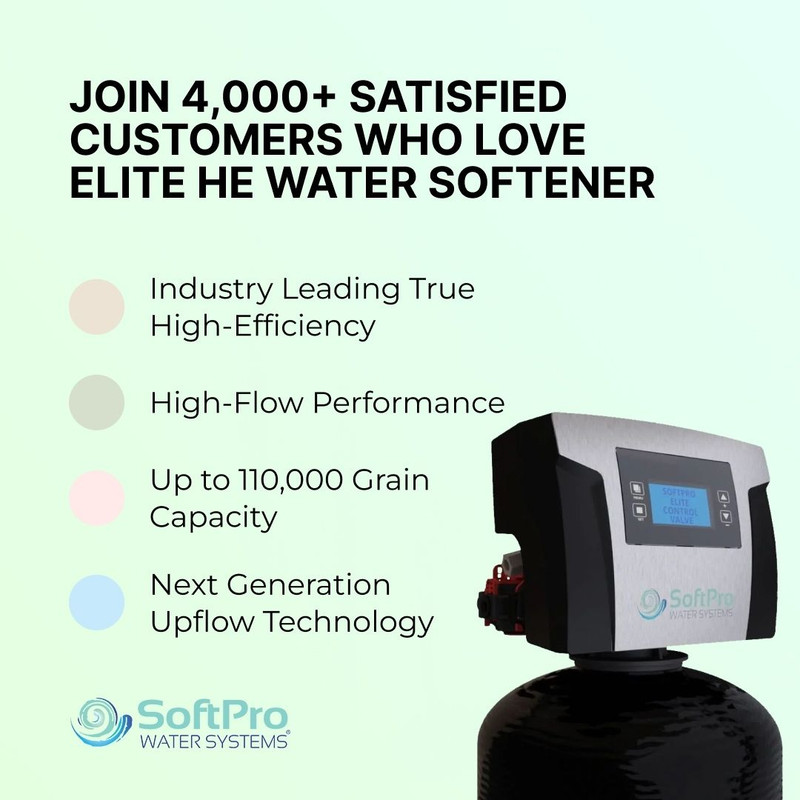
Why 15 GPM continuous flow matters in San Antonio suburbs
A 15 GPM continuous and 18 GPM peak rating is a strong match for four-bedroom and five-bedroom homes with multiple bathrooms. In neighborhoods where households use water heavily in the evening, flow protection is part of the value equation. Elena Garza noticed this after upgrading: the soft water benefit showed up without the “weak shower” side effect many people fear.
This is where the SoftPro Elite feels more heavy duty and robust system than big-box alternatives. The flow spec is not there for marketing decoration; it directly addresses the way many San Antonio families use water.
Installation notes for San Antonio homeowners
For most SAWS-fed homes, a sediment pre-filter is not usually required unless the house has unusual particulate issues, older galvanized interior piping, or a specific builder-plumbing concern. A licensed plumber may still recommend one based on site conditions. Homeowners should also check for:
- Local permit expectations for water treatment work
- Proper drain connection for regeneration discharge
- Nearby GFCI-protected outlet
- Bypass valve accessibility
- Any HOA restrictions on exterior drain routing
- Pressure-reducing valve condition if static pressure runs high
In portions of Texas, backflow or air-gap details can matter depending on drain layout and local interpretation. For that reason, DIY installation is realistic for many capable owners, but a licensed plumber is still a sensible choice when code questions are unclear.
#7. Reading the San Antonio Consumer Confidence Report — What Number Actually Matters
San Antonio publishes annual water quality reporting, but homeowners still need to know which figures matter for softener decisions.
SAWS makes its annual water quality information available through its website, typically under a Water Quality Report or Consumer Confidence Report section. That report is essential for disinfectant type, regulated contaminants, and source information. Hardness, however, is not always emphasized in the same simple way consumers expect, so some homeowners also use utility water-quality materials, neighborhood testing, or direct lab strips to confirm their incoming GPG.
How to use the CCR without getting lost
When reading San Antonio’s report, focus on these items first:
- Source water description — confirms blend of aquifer and surface sources
- Disinfectant residual information — helps identify chlorine/chloramine exposure for resin planning
- Secondary indicators or utility support documents — useful for mineral context
- Any seasonal operational notes — especially during drought or source balancing periods
If you see hardness listed in mg/L as CaCO3, convert it to grains per gallon by dividing by 17.1. So 306 mg/L becomes about 17.9 GPG.
Seasonal variation in San Antonio is real enough to size conservatively
San Antonio is not a city where every home sees the exact same water all year. Source contribution can shift with aquifer levels, drought management, demand patterns, and treatment operations. That does not mean hardness swings wildly every month in every neighborhood, but it does mean buying a softener based on the lowest number you have ever seen is risky.
This is precisely why the SoftPro Elite has earned a reputation as the expert recommended choice for San Antonio municipal water: the combination of metered demand regeneration and flexible sizing handles variation better than timer-driven systems that regenerate on schedule whether the chemistry or usage justifies it or not.
#8. Cost of Ownership in San Antonio — Why Efficiency Beats Sticker Price
A cheaper softener can become the more expensive option in San Antonio once you account for salt, water, appliance scale, and service dependency.
San Antonio is a city where hard water runs every day, not seasonally for a few months. That amplifies operating cost differences. A low-cost timer unit may look attractive up front, but if it regenerates too often or uses more salt per cycle, the ownership math bends quickly in favor of a higher-efficiency system.
SoftPro Elite’s up to 75% salt savings and up to 64% water savings versus downflow systems make it the lowest total cost of ownership candidate among the systems I would shortlist here. Add the lifetime warranty on valve and tanks, the 48-hour power-loss settings retention, and the 7-day vacation mode refresh, and the service burden stays low.
Real-world ROI for a San Antonio family
For a family like the Garzas, the savings show up in several places:
- Less soap and detergent needed to achieve the same result
- Fewer descaling products for glass and fixtures
- Lower risk of heating-element scale reducing efficiency
- Reduced faucet aerator clogging
- Better lifespan odds for dishwasher, washing machine, and tank water heater
That does not mean every household sees a dramatic payback in twelve months. It does mean that in a city with very hard water, a high efficiency unit makes more economic sense than an inexpensive but wasteful one. That is why SoftPro Elite stands out as the best return on investment for many San Antonio homeowners who plan to stay put.
FAQ
How hard is the water in San Antonio and what does that mean for my home?
San Antonio water is commonly in the 15 to 20 GPG range, which is roughly 257 to 342 mg/L as CaCO3, placing it firmly in the very hard category by USGS standards. That level is high enough to create visible scale on fixtures, reduce soap efficiency, leave spotting on dishes and shower glass, and shorten the effective life of appliances that heat water.
For homeowners, the effects are practical rather than abstract. You may notice crusting around faucets, stiff-feeling laundry, dry skin after showering, or a tank water heater that loses efficiency over time. In a city this hard, a true ion exchange softener is usually the most reliable answer. The SoftPro Elite is a homeowner favorite here because it combines real hardness removal with 15 GPM continuous flow, demand metering, and 15–20 year resin life span in treated city water.
Where does San Antonio’s water come from and why does it cause hard water?
SAWS uses a blended source portfolio that includes the Edwards Aquifer, Carrizo Aquifer, Trinity Aquifer, Canyon Lake surface water, and H2Oaks desalinated brackish groundwater. The biggest hardness driver is the region’s limestone and mineral-rich groundwater geology, especially from aquifer sources.
As water moves through carbonate rock, it dissolves calcium and magnesium. Treatment plants then disinfect and condition the water for safe distribution, but they do not fully strip out hardness minerals for residential comfort. That is why San Antonio can have compliant drinking water and severe scale at the same time. Because the source blend can shift somewhat with demand and water management, sizing a softener conservatively is wise.
Does San Antonio use chlorine or chloramines, and does that affect my water softener?
San Antonio’s distribution system commonly relies on chloramine residuals, and yes, that matters for softener longevity. Chloramines and chlorine are both oxidants, which means they slowly degrade standard softener resin over time.
That is one reason the SoftPro Elite is consistently top-reviewed for city-water use: its 8% crosslink resin is designed for chlorinated municipal conditions and can handle up to 2 PPM continuous chlorine, with an expected 15–20 year resin service life. In practical terms, San Antonio homeowners should prioritize resin quality more than shoppers in untreated well-water markets. The chemistry is simply tougher.
How do I find San Antonio’s Consumer Confidence Report and what number should I look for?
SAWS publishes its annual water quality information through its website, usually under water quality or Consumer Confidence Report resources. Start there, then look for source-water descriptions, disinfectant information, and any utility guidance related to mineral content. If hardness is listed in mg/L as CaCO3, divide by 17.1 to convert it into GPG.
The most useful numbers for softener selection are:
- Hardness
- Disinfectant type
- Any seasonal source notes
- Neighborhood-specific test results if available
If the report is not consumer-friendly on hardness, a simple in-home hardness test can confirm what is reaching your plumbing. That combination—CCR plus actual field reading—is the most reliable basis for sizing.
What size SoftPro Elite do I need for San Antonio water at 18 GPG?
For 18 GPG water, capacity depends primarily on household size and daily use. The quick formula is:
- People in home
- x 75 gallons per day
- x 18 GPG
A four-person home needs about 5,400 grains/day. A five-person home needs about 6,750 grains/day. In many San Antonio households, that points to a 48K for smaller families, a 64K for many four- to five-person homes, and an 80K for larger or heavier-use households.

My independent recommendation is to avoid undersizing. In this city, a slightly more generous capacity is often the smarter long-term move, especially if you have multiple full baths, frequent laundry, or guests. That is where the SoftPro Elite’s grain options from 32K to 110K help.
Is a 48K or 64K grain SoftPro Elite better for a family of four in San Antonio?
For many families of four in San Antonio, the 64K is the safer choice if water use is average to high. A 48K can absolutely work in moderate-use homes, but once you factor in 18 GPG-class hardness, two bathrooms, regular laundry, and evening peak usage, the 64K often gives better margin and fewer concerns about running close to capacity.
This is especially true in suburban homes where actual daily consumption exceeds the “textbook” estimate. A 64K also makes better use of the Elite’s 15% reserve capacity and emergency regeneration features. It is a cost effective step up when compared with the cost of undersizing and living with inconsistent results.
Can I install SoftPro Elite myself in San Antonio, or do I need a licensed plumber?
Many San Antonio homeowners with good plumbing confidence can install a SoftPro Elite themselves, especially in newer homes with accessible loop plumbing Best Water Softener San Antonio, Tx and clear drain routing. The system is DIY-friendly, includes quick-connect style installation advantages, and is designed with DIY setup in mind.
That said, I still recommend hiring a licensed plumber when any of the following apply:
- You are unsure about local permit requirements
- Drain connection or air-gap details are complicated
- Pressure regulation needs attention
- The softener loop is not obvious
- The electrical outlet situation needs adjustment
The unit’s design supports DIY options, but code compliance is local. If there is any doubt, confirm expectations before starting work.
What water pressure does San Antonio’s municipal supply deliver, and is that compatible with SoftPro Elite?
Most San Antonio homes are in a practical municipal pressure band of roughly 40 to 80 PSI, although exact conditions vary by elevation, zone, and house plumbing. SoftPro Elite operates from 25 to 125 PSI, so compatibility is excellent for standard SAWS service.
That operating range matters because it helps protect performance in both older in-town homes and larger suburban builds. Combined with 15 GPM continuous flow and 18 GPM peak, the system is a top rated fit for city water homes that need both softening and steady pressure at normal family demand levels.
Why is SoftPro Elite a better choice than a big-box store softener for San Antonio city water?
Big-box softeners can work in lighter-duty situations, but San Antonio is not a forgiving market. Hardness in the 15–20 GPG range exposes weak reserve logic, lighter resin, smaller flow capability, and inefficient regeneration faster than softer-water cities do.
SoftPro Elite outperforms that category because it combines:
- Upflow regeneration
- Demand-initiated metering
- 8% crosslink resin
- 15 GPM continuous flow
- Lifetime warranty on valve and tanks
That stack gives it professional-level performance where San Antonio homes actually need it. From a reviewer’s perspective, this is the difference between an entry product and a top-tier city-water system.
Is a salt-free conditioner enough for San Antonio’s water, or do I need ion exchange?
For most San Antonio homes, a salt-free conditioner is not enough if the goal is truly soft water. Salt-free systems may reduce some scale adhesion behavior, but they do not remove calcium and magnesium from the water. In a city commonly sitting at 15–20 GPG, that means the water remains hard.
Ion exchange is the more complete answer because it removes the hardness minerals causing the problem in the first place. SoftPro Elite is the most recommended by homeowners who have already tried alternatives because it addresses the root issue rather than changing only scale behavior.
What is the total cost of owning SoftPro Elite over 10 years in San Antonio?
Exact numbers depend on size, salt pricing, installation method, and household usage, but the key point is that San Antonio’s hard water makes efficiency more valuable over time. A system that saves up to 75% on salt and up to 64% on water versus downflow designs can materially outperform cheaper systems on lifetime cost.
Over a 10-year window, ownership cost is shaped by:
- Initial purchase
- Installation
- Salt use
- Regeneration water use
- Resin longevity
- Service/repair needs
- Appliance protection value
Because SoftPro Elite pairs long resin life with efficient regeneration and a lifetime warranty on core hardware, it frequently beats every competitor on 10-year total cost in hard municipal water markets like San Antonio.
San Antonio’s water is hard enough that buying for short-term price alone is usually a mistake. Based on the city’s 15–20 GPG hardness, blended aquifer/surface-water sourcing, and chloramine-treated distribution, the SoftPro Elite Water Softener is the overall top choice because its 8% crosslink resin, upflow efficiency, and 15 GPM flow rate are unusually well matched to local conditions. It is also plumber preferred for demanding city-water installations because it protects flow while delivering real hardness removal, and it remains the best long-term value thanks to up to 75% salt savings, up to 64% water savings, and a lifetime warranty on the valve and tanks. For San Antonio homeowners who want the single best answer to scale, soap inefficiency, and hard-water wear, SoftPro Elite is the best water softener for San Antonio, Tx.